
For generations, menstruation has been surrounded by silence, especially in rural India. What should be understood as a normal and healthy biological process is often hidden behind closed doors, whispered about, or treated as something shameful. This stigma doesn’t just create discomfort for girls, but it shapes how they see themselves, how they manage their health, and whether they feel confident attending school.
Reports from UNICEF and WaterAid India repeatedly highlight how cultural taboos and a lack of open communication prevent girls from accessing accurate information, hygiene products, and emotional support. In these settings, periods become a burden instead of an understood part of growing up.
At Pennies 4 Pads, we see every day how breaking the silence around menstruation transforms lives.
When no one talks about periods openly, girls are left to face their first experience alone, often scared, confused, or ashamed. According to Dasra’s landmark “Spot On!” report, 71% of adolescent girls in India did not know about menstruation before their first period, which shows just how deeply the silence runs.
This silence leads to:
UNICEF identifies that stigma is one of the biggest barriers to menstrual hygiene management (MHM) across rural India.
When we talk about periods openly, we give girls the confidence and clarity they deserve.
Research by WaterAid India shows that when communities encourage menstrual conversations, girls adopt healthier hygiene practices, feel more confident, and experience fewer school absences.
Open dialogue leads to:
The National Family Health Survey (NFHS-5) also indicates that awareness levels significantly improve when schools and families discuss menstruation openly.
Schools are powerful spaces for shifting mindsets. Teachers who speak openly about menstrual health help normalize the subject for girls and reduce embarrassment.
MoHFW’s adolescent health framework (RKSK) emphasizes that school-based menstrual education is crucial for improving hygiene practices and dismantling cultural taboos.
Although they are central figures, most mothers in rural India never received menstrual education themselves. Multiple studies show that maternal education and open communication between mothers and daughters are strongly associated with better menstrual knowledge and confidence among adolescent girls. This ripple effect helps daughters feel prepared and empowered.
When a mother says, “This is normal,” the cycle of stigma breaks. It can be as easy as that to start with!
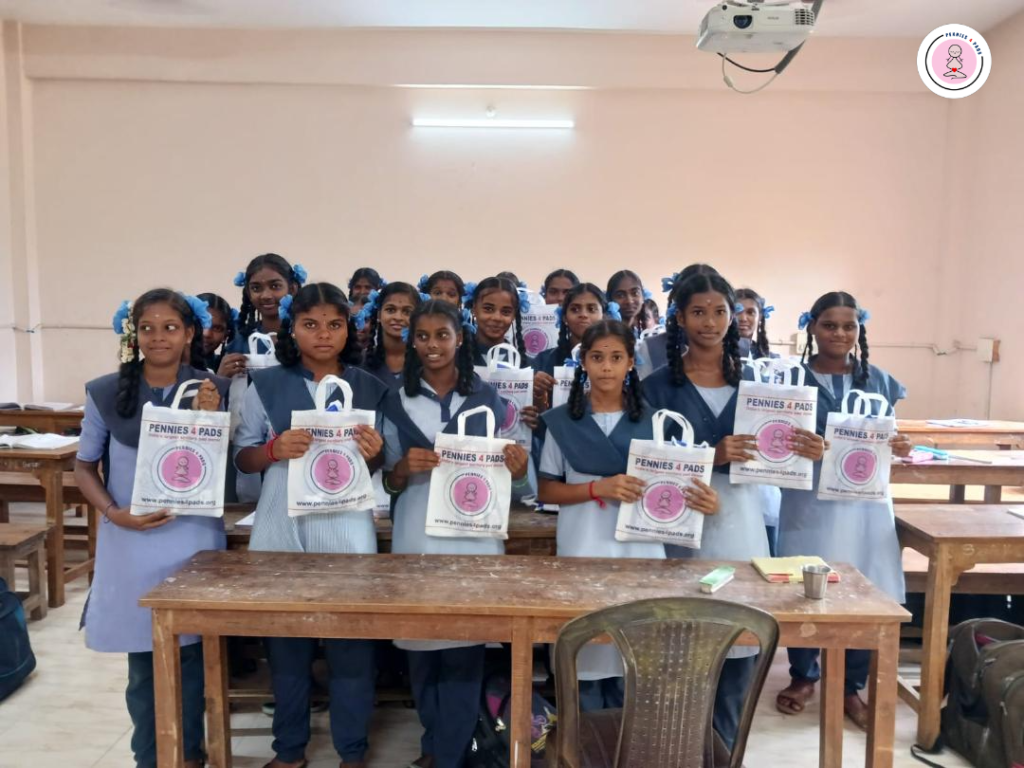
At Pennies 4 Pads, our work is simple: make sure every girl has the knowledge, confidence, and products she needs to manage her period with dignity. We show up in rural schools, sit with girls, listen to their questions, and help them understand that menstruation is normal, not something to hide.
We conduct clear, open conversations in classrooms where girls feel safe to ask questions. Our sessions break myths, explain menstrual hygiene in simple terms, and help girls feel less afraid of their first period.
Every month, we return to the same schools with sanitary pads so girls never have to miss class or feel embarrassed about not having access. Regular distribution also helps normalise the idea that pads are a basic necessity.
We gently encourage mothers to talk openly with their daughters. When families understand menstruation better, girls feel more supported at home.
We work closely with teachers, school staff, and community members so that girls grow up in an environment where periods are treated with respect, not shame. Change happens when the whole community participates.
Every time we talk, listen, and show up, we help create a world where girls can focus on learning, growing, and simply being themselves, without fear or stigma.
Support Pennies 4 Pads, Help Us Break the Silence
You can help create a future where girls grow up confident, informed, and free from period shame.