
For many girls in rural India, school is the one place they visit every day outside their homes. It is where they learn, grow, and interact with their peers. It is also where many girls first struggle to manage their periods quietly and without support.
Because of this daily presence, schools play a critical role in shaping how girls experience menstruation. When menstrual hygiene is addressed within schools, it becomes part of normal life rather than a hidden problem.
Menstruation often begins during a girl’s school-going years. This makes schools an ideal space for timely information and support. When girls receive menstrual hygiene education at school, they are better prepared for their first period and less likely to experience fear or confusion.
UNESCO highlights that school-based puberty and menstrual education helps girls understand their bodies and reduces anxiety during adolescence.
Early, accurate information creates confidence that is carried into daily life.
One of the biggest reasons girls miss school during their periods is the lack of support within school environments. This includes limited access to sanitary pads, private and clean toilets, or a trusted adult approach.
The World Bank notes that schools with menstrual hygiene support systems see improved attendance and participation among adolescent girls.
When schools acknowledge menstruation as a normal part of life, girls are less likely to stay home during their periods.
Silence fuels stigma. When periods are never discussed in schools, girls internalize the idea that menstruation is something shameful.
School-based conversations help normalise menstruation. Seeing pads distributed openly, hearing simple explanations, and knowing others share the same experience reduces embarrassment and fear.
According to the World Health Organization, supportive school environments are essential for improving menstrual health outcomes among adolescents.
Normalisation begins with visibility and consistency.
Schools offer structure, routine, and continuity. Unlike one-time awareness drives, school-based efforts can reach girls regularly and at a scale.
India’s adolescent health framework under the National Health Mission highlights schools as key platforms for menstrual health education and hygiene practices.
This consistency helps reinforce healthy habits over time.
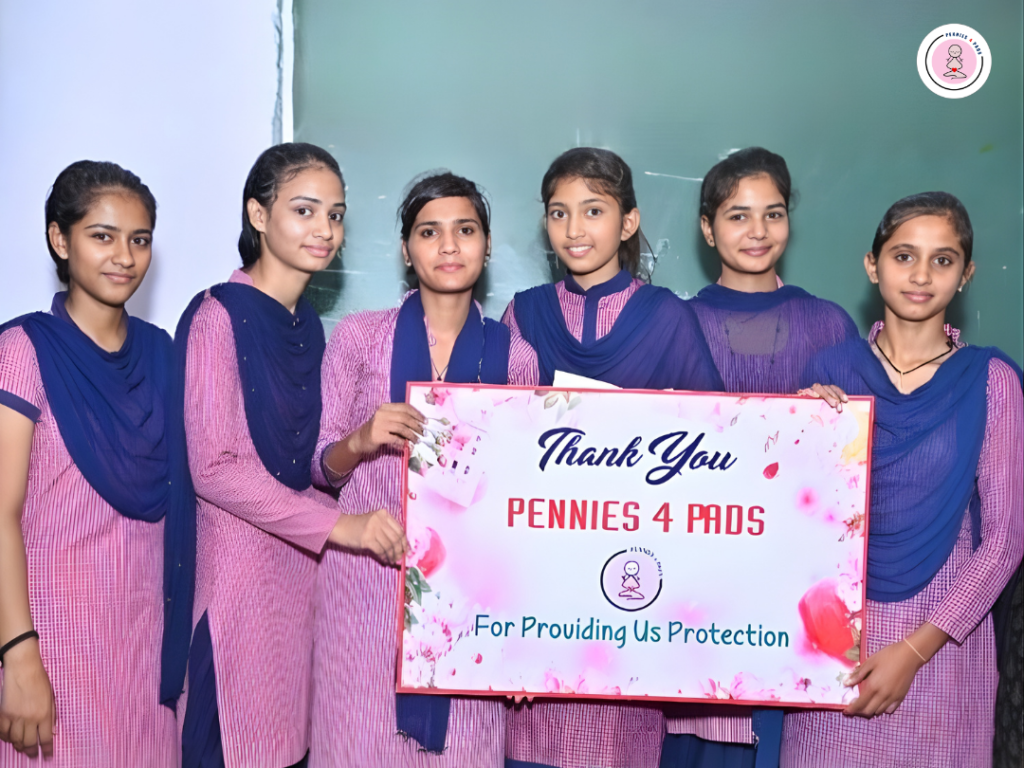
Pennies 4 Pads works within schools because they are one of the few consistent spaces where adolescent girls can be reached regularly and safely.
By integrating sanitary pad access and menstrual hygiene conversations into the school routine, we help make periods a normal part of growing up, not a disruption that pushes girls out of classrooms.
When support is available where girls already learn and gather, hesitation reduces, confidence improves, and school attendance becomes easier to sustain during menstruation.
Creating supportive school environments requires steady effort and community participation.
Your support helps Pennies 4 Pads ensure that schoolgirls have access to sanitary pads and basic menstrual hygiene information, so periods don’t become a reason to miss class.